
In June 2026, Allergan Aesthetics received FDA approval for SKINVIVE by JUVÉDERM for horizontal neck lines — making it the first and only hyaluronic acid injectable approved in the U.S. to reduce horizontal neck lines and improve neck appearance in adults over 21. For providers already using HA skin boosters off-label in the neck, the approval mostly confirms what many have been doing clinically. What it also does is sharpen the conversation around patient selection, product positioning, and how SKINVIVE fits into broader neck rejuvenation protocols.
What you will learn in this article:
Allergan states that SKINVIVE is approved to reduce horizontal neck lines and improve neck appearance, with results lasting up to six months with optimal treatment, which may include an optional touch-up at one month. Prior to this, many providers were using HA injectables and skin boosters off-label in the neck for fine lines, crepey texture, and early tech-neck changes. The approval changes the regulatory footing for one specific category — a hyaluronic acid product positioned for skin quality improvement rather than volumization — but it doesn’t change the clinical complexity of treating the neck.
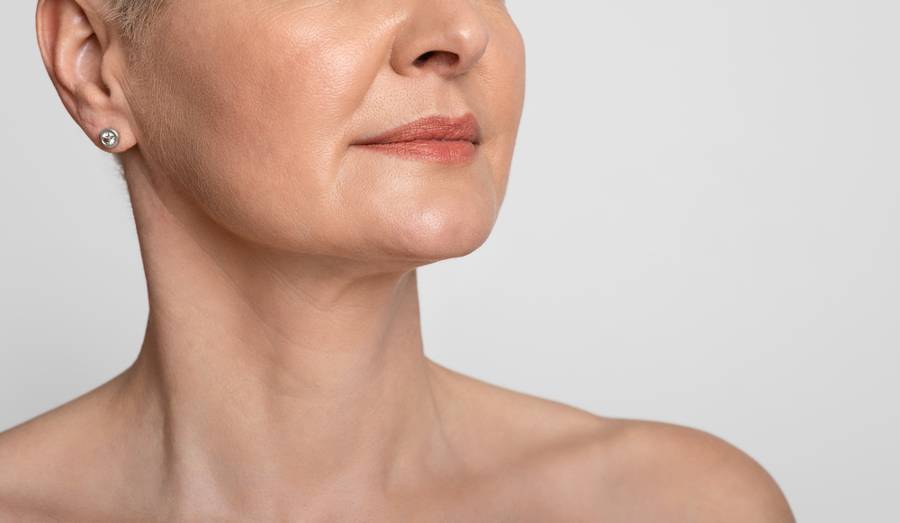
Horizontal neck lines may reflect repetitive flexion, dermal thinning, photoaging, platysmal activity, laxity, post-weight-loss deflation, or some combination of all of the above. A new label doesn’t eliminate the need for careful anatomy assessment, patient selection, and realistic expectation setting — particularly in the neck, where skin is thin, movement is constant, and technique errors are more visible than in the midface.
Neck rejuvenation breaks down more cleanly when you think in phenotypes rather than products. Three presentations come up most frequently.
The younger tech-neck patient typically presents with early horizontal lines from repetitive flexion, decent skin elasticity, and limited laxity. Skin quality is the primary concern — not structural deflation or banding. SKINVIVE fits this presentation well. The goal is softening early etched lines and improving surface hydration and smoothness, and depending on the exam, a small-dose neuromodulator may be warranted if dynamic platysmal contribution is evident. Topical retinoids and photoprotection round out the at-home component for this patient.
The photoaged, crepey neck is a different problem. Here the issue is usually diffuse dermal thinning, textural decline, and cumulative sun damage rather than distinct etched lines. SKINVIVE can contribute to hydration and surface quality in these patients, but it’s rarely sufficient on its own. Biostimulatory agents, RF microneedling, or fractional resurfacing typically play a larger role, with HA skin rejuvenation approaches functioning as a layering or finishing strategy rather than the primary intervention.
The post-weight-loss neck — including patients experiencing cervical changes after GLP-1-associated weight loss, sometimes referred to as “Ozempic neck” — often presents with deflation, banding, laxity, and quality changes simultaneously. SKINVIVE may improve surface quality in these patients, but it won’t address laxity or platysmal banding. Energy-based tightening, biostimulation, and in more advanced cases, surgical referral, are usually part of the conversation. Overpromising from a single injectable in this phenotype is one of the most common errors newer aesthetic providers make.
Both skin boosters and traditional fillers are hyaluronic acid products — but they serve different functions. Traditional fillers restore structure or volume. Skin boosters are injected more superficially to improve hydration, reflectivity, texture, and fine-line appearance without producing a sculpted effect. Understanding the distinctions between HA products is particularly important in the neck, where product that performs well in the midface can become visible, irregular, or underwhelming when used without accounting for thin skin and constant movement patterns.
Framing SKINVIVE as a skin-quality tool rather than a wrinkle filler helps set accurate patient expectations from the first consultation. Patients who come in expecting a filler result will be disappointed by a skin booster outcome, even if that outcome is clinically appropriate.
SKINVIVE doesn’t replace multimodal neck rejuvenation — it adds a clearer on-label option within it. Published data on horizontal neck lines already supports combining modalities: focused ultrasound, HA injectables, and botulinum toxin have been studied together to address different contributors to neck aging and line formation. Other approaches pair HA injections with thread lifting or layer injectables with device-based tightening to address quality, contour, and support together.
In practice, that usually means integrating SKINVIVE with neuromodulators for platysmal activity, energy-based devices for laxity, and biostimulatory approaches for crepey texture. The question isn’t whether to offer SKINVIVE — it’s which patients benefit from adding it to a protocol that already addresses their primary concerns.
For providers building out a neck treatment menu, the Nefertiti lift and platysmal band treatment are logical complements, and providers who are comfortable layering these approaches will find SKINVIVE slots in naturally for the right patient presentations. A review of décolletage treatment protocols is also worth revisiting alongside this, since many of the same phenotypic principles apply just below the jawline.
The SKINVIVE neck approval is a good example of how the injectable landscape evolves: incremental label expansions that require clinical interpretation rather than just awareness. Today it’s a neck skin booster indication. The next update may involve a new toxin, a new filler formulation, or a regenerative protocol. Providers who want to stay clinically current need a framework for evaluating new options, not just a news feed.
For nurse practitioners integrating aesthetics into a broader clinical role, the Certified Aesthetic Provider (CAP) program offers that structure — covering the anatomy, product selection logic, and treatment planning frameworks that make approvals like this one clinically actionable rather than just informational. The CAP curriculum includes emerging modalities across injectables, skin quality, and regenerative techniques, which means providers aren’t evaluating each update from scratch.
What exactly did the FDA approve SKINVIVE for in June 2026?
The FDA cleared SKINVIVE by JUVÉDERM to reduce horizontal neck lines and improve neck appearance in adults 21 and older, with results lasting up to six months with optimal treatment (which may include an optional touch-up at one month). This makes it the first and only HA injectable with a formal on-label neck indication in the U.S.
How is SKINVIVE different from traditional hyaluronic acid fillers for the neck?
Traditional HA fillers are formulated to restore volume and structure. SKINVIVE is a skin booster — injected more superficially to improve hydration, skin quality, texture, and fine-line appearance without creating a volumized or sculpted effect. Using either product in the wrong context produces mismatched results and unmet patient expectations.
Which patients are the best candidates for SKINVIVE in the neck?
Patients with early horizontal lines, good skin elasticity, and minimal laxity — often younger patients with tech-neck changes — tend to be the strongest candidates. Patients with significant laxity, platysmal banding, or diffuse crepey texture typically need additional or different modalities. SKINVIVE may still play a role in those cases, but as part of a broader protocol rather than a standalone treatment.
Can SKINVIVE be combined with Botox or other neck treatments?
Yes, and combination approaches are standard for comprehensive neck rejuvenation. Published studies support combining HA injectables with botulinum toxin and energy-based devices to address different contributors to neck aging. In practice, SKINVIVE pairs logically with neuromodulators for platysmal activity, RF or ultrasound devices for laxity, and biostimulatory agents for crepey texture.
Does this approval affect how providers should discuss neck treatment options with GLP-1 weight loss patients?
It adds an option but doesn’t change the underlying complexity. Post-weight-loss neck changes — deflation, banding, laxity, and quality decline — often occur together. SKINVIVE can address the skin quality component, but patients with significant laxity or banding need to understand that a skin booster alone will not produce a lifting or tightening effect. Honest expectation-setting upfront prevents dissatisfaction after treatment.
What training do providers need to offer SKINVIVE for neck lines?
Providers should have solid foundational knowledge of neck anatomy, including platysmal anatomy and the skin’s behavior under movement, before injecting any product in this area. Comprehensive aesthetic training programs that cover product selection logic, injection technique, and combination protocols are the most practical preparation — particularly for providers expanding their neck treatment offerings beyond standard toxin or filler applications.
Free CME Training
Get instant access to a complete Botox® training module and earn 1 AMA PRA Category 1 CME at no cost. Covers facial anatomy, crow’s feet injection technique, patient consultation, and safety protocols.
Sign up for free access:
No credit card required. Learn more about this training →
Interested in broader Botox® education? Explore IAPAM’s Botox® training options →
References:
Terms and conditions apply. Offer expires October 31.